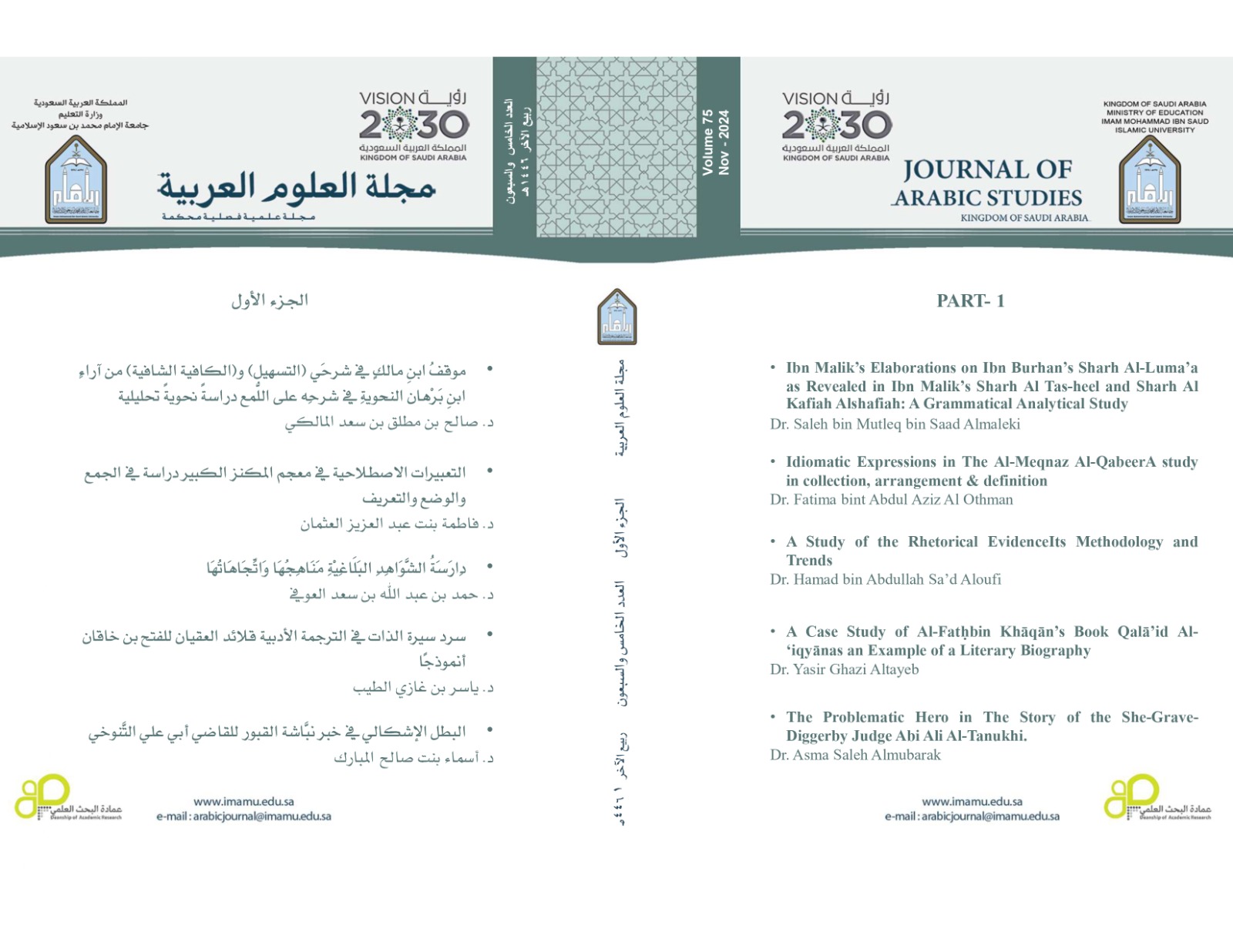

الكلمات المفتاحية: البطل الإشكالي، نبَّاشة القبور، الخبر، القاضي التَّنوخي The Problematic Hero in Khabar Nabashat Alquboor (The Report of the Grave Robber) by Judge Abi Ali Al-Tanukhi.
Keywords:
Problematic hero, Khabar Nabashat Alquboor, Narrative, , Judge Al-TanukhiAbstract
This research examines the concept of the problematic hero in the narrative “Khabar Nabāshat al-Qubūr” (The Report of the Grave Robber) by Judge Abū ʿAlī al-Tanūkhī (4th century AH). It identifies the defining features of this hero type in narrative literature by drawing on major modern Western theoretical frameworks—particularly Georg Lukács’s Theory of the Novel and Lucien Goldmann’s Introduction to the Sociology of the Novel. Through a descriptive-analytical approach, these theories are applied to the female protagonist in the story to demonstrate that the problematic hero is not confined to modern Western literature but can also be found within the classical Arabic narrative heritage.
The findings reveal that the heroine embodies the core traits of the problematic hero: the tension between individual aspirations and external constraints, inner conflict shaped by social reality, and a narrative journey rooted in existential struggle. Her portrayal shows a profound awareness of moral, psychological, and societal complexities, aligning closely with the modern theoretical model of the problematic protagonist.
Based on these results, the study recommends expanding research into classical Arabic narrative texts using contemporary critical frameworks to uncover similar character models. It further encourages integrating modern theoretical perspectives with the analysis of Arab heritage works to enrich both literary theory and the understanding of Arabic narrative traditions.