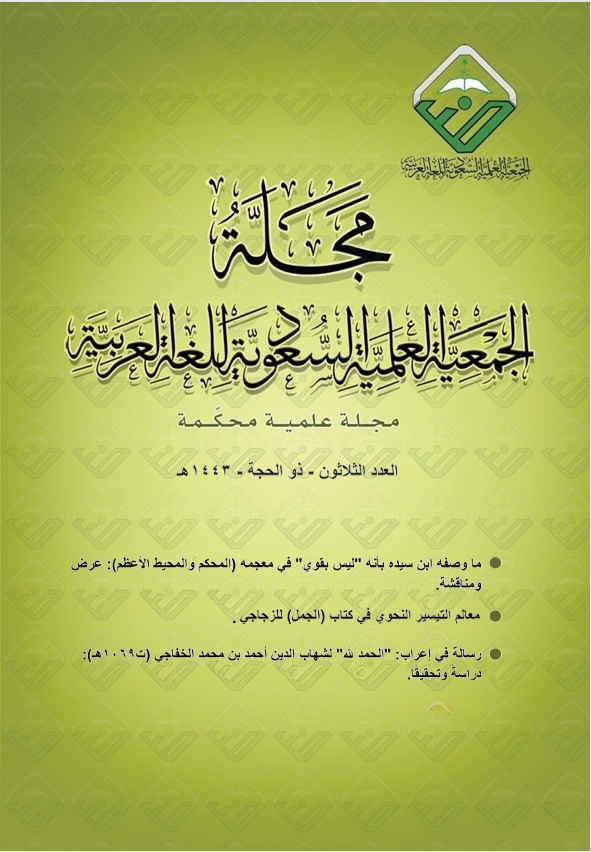

رسالة في إعراب (الحمد لله) للشهاب الخفاجي
دراسة وتحقيق
الكلمات المفتاحية:
رسالة، إعراب، الحمد لله، الشهاب، الخفاجي، تحقيق، دراسةالملخص
يأتي هذا البحث؛ ليزيل الغبار عن إحدى المخطوطات المهمّة، وهي رسالة صغيرة الحجم، عظيمة القدر، للعلَّامة شهاب الدِّين أحمد بن محمد الخفاجيّ (ت 1069هـ)، وعنوانها: (إعراب "الحمد لله")، وقد جاءت هذه الرسالة إجابة عن سؤال من سأل عن قول الزمخشري في كشافه بشأن إعراب (الحمد لله): "إنّ أصل (الحمد لله) النصب، والمعنى: نحمد الله حمدًا، وإنّ (أل) فيها للجنس، وإنّ من ذكر أنها للاستغراق فقد وَهم، مع أنها أبلغ في المعنى"؟ فانبرى الشهاب الخفاجي يجيب عن هذا السؤال، ويوضِّح قول الزمخشري ويشرحه، مدلّلًا عليه بأقوال العلماء من أرباب المدرستين البصرية والكوفية، وعلى رأسهم سيبويه والفرّاء. وقد قمت في أثناء التحقيق بمناقشة وإبراز ما تحويه الرسالة من المسائل العلمية، وأقوال العلماء، وموقف الخفاجي من الزمخشري، متبعة المنهج العلمي في تحقيق المخطوط ودراسته.
This study aims to shed light on one of the important yet overlooked manuscripts — a concise but significant treatise by the renowned scholar Shihāb al-Dīn Aḥmad ibn Muḥammad al-Khafājī (d. 1069 AH), entitled The Grammatical Analysis of “Al-Ḥamdu Lillāh”. This treatise was written in response to a question posed regarding al-Zamakhsharī’s commentary in his al-Kashshāf, specifically concerning the grammatical structure of the phrase “al-ḥamdu lillāh”. The central question addressed in the treatise revolves around al-Zamakhsharī’s statement in al-Kashshāf: “The original grammatical case of (al-ḥamdu lillāh) is accusative, meaning: We praise Allah with praise. The definite article (al) denotes genus (i.e., general category), and whoever claims it denotes totality (istighrāq) is mistaken, although the latter conveys a stronger meaning.”
In response, al-Shihāb al-Khafājī took it upon himself to clarify and explain al-Zamakhsharī’s position. He supported his exposition with scholarly opinions drawn from both major grammatical schools — the Basran and Kufan — particularly citing authorities such as Sībawayh and al-Farrā’.
In the course of the critical edition, I have examined and highlighted the scholarly issues addressed in the treatise, the various opinions of the grammarians, and al-Khafājī’s stance on al-Zamakhsharī’s interpretation. This was carried out following a rigorous academic methodology in both editing and analyzing the manuscript.